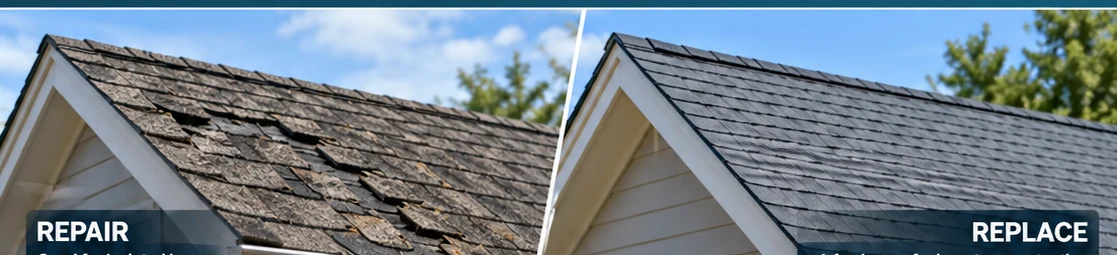
Quick frameworkStart with the scope of the problem
Current manufacturer homeowner guidance generally distinguishes between small, localized damage that may be repairable and significant or widespread problems that can favor replacement. Roof age, repair history and the condition of the complete roof system add important context.
A repair may deserve consideration when…
- The problem is confined to a clearly identifiable area.
- Surrounding roofing remains in serviceable condition.
- The roof does not have a pattern of recurring failures.
- Decking and structural components are sound in the affected area.
- A compatible, durable repair can reasonably address the cause.
Replacement may deserve consideration when…
- Deterioration is widespread rather than isolated.
- Leaks or failures are recurring in different areas.
- Decking or multiple roof-system components are deteriorated.
- Storm damage affects a substantial portion of the roof.
- Additional repairs would leave a broadly aging or compromised system in place.
Compare the evidenceRepair vs. replacement is more than a price comparison
| Question | What may support repair | What may support replacement |
|---|
| How extensive is the damage? | One limited, identifiable problem. | Widespread deterioration or multiple affected areas. |
| Is the problem recurring? | First isolated incident with otherwise sound surrounding materials. | Repeated leaks or new failures appearing after prior work. |
| What is beneath the surface? | Sound decking and limited affected components. | Soft, deteriorated or damaged decking or broader moisture-related concerns. |
| What is the roof's overall condition? | Most of the roof remains serviceable. | Broad aging, cracking, curling, granule loss, failing details or other system-wide decline. |
| Can the repair integrate properly? | Compatible materials and a practical repair detail are available. | Material matching, brittle surrounding roofing or system condition makes a durable isolated repair difficult. |
| What remains after the work? | The repair addresses the cause while leaving a sound roof around it. | Major spending would still leave numerous aging or vulnerable components in service. |
Important: Generic percentage rules and age cutoffs can be useful conversation starters, but they are not universal replacement standards. The individual roof, proposed scope, local requirements, product limitations and actual findings matter.
The leak questionDoes a leaking roof need to be replaced?
Not automatically. A leak can originate around flashing, a penetration, damaged shingles or another localized detail. But recurring leaks in different locations, widespread material deterioration, failed underlayment or damaged decking can change the decision.
Find the source
The visible interior stain may not be directly beneath the exterior entry point. Ask how the source was identified.
Inspect surrounding materials
A repair recommendation should consider the condition of the roofing around the problem, not only the failed spot.
Ask what the repair solves
Clarify whether the proposed work addresses the underlying cause and what condition will remain elsewhere on the roof.
Repair historyRepeated repairs can reveal a larger decision
One successful localized repair can be entirely reasonable. The calculation changes when separate problems continue appearing. At that point, homeowners should compare the expected benefit of additional isolated work with the scope and value of replacement.
Ask a better question than “Can this be repaired?”Ask: “If this area is repaired, what is the condition of the rest of the roof, and what problems are likely to remain?” A technically possible repair is not necessarily the same as a sensible long-term plan.
See How Roof Age and Condition Work Together →
Roof ageAn older roof is not automatically a replacement roof
Age helps establish context. It becomes more meaningful when it aligns with physical deterioration, a growing repair history or multiple failing details. Conversely, severe weather or installation problems can create substantial issues on a roof that is comparatively young.
Rather than treating a lifespan range as a deadline, document the roof's material, approximate installation date, prior work, storm history and present condition.
Estimate comparisonIf replacement is proposed, compare the scope—not just the total
A replacement proposal should help you understand what is being removed, installed, replaced and excluded. This is especially important when comparing a replacement proposal against a repair proposal because the two scopes solve very different amounts of the roof.
Tear-off & decking
What existing material will be removed? How will deteriorated decking be identified, priced and authorized?
System components
Look for underlayment, flashing, ventilation, penetrations, edges and other components—not only the visible roofing material.
Exclusions & changes
Understand what is not included and what discoveries could change the final scope or price.
Use the Roof Replacement Estimate Guide →