Roof age & replacement guide

How long does a roof last—and when should you replace it?

Roof age is one clue, not a replacement diagnosis. Roofing material, installation quality, climate, sun and wind exposure, ventilation, roof geometry, maintenance and previous damage can all change how long a roof performs.

This guide helps homeowners use roof age intelligently—alongside the roof's actual condition—before making a major replacement decision.

Check the Signs You May Need Replacement →

Start here

There is no expiration date stamped on a roof

Published lifespan ranges can be useful for planning, but they should not be treated like a countdown clock. Two roofs installed in the same year can age differently because their materials, workmanship, exposure and ventilation are different.

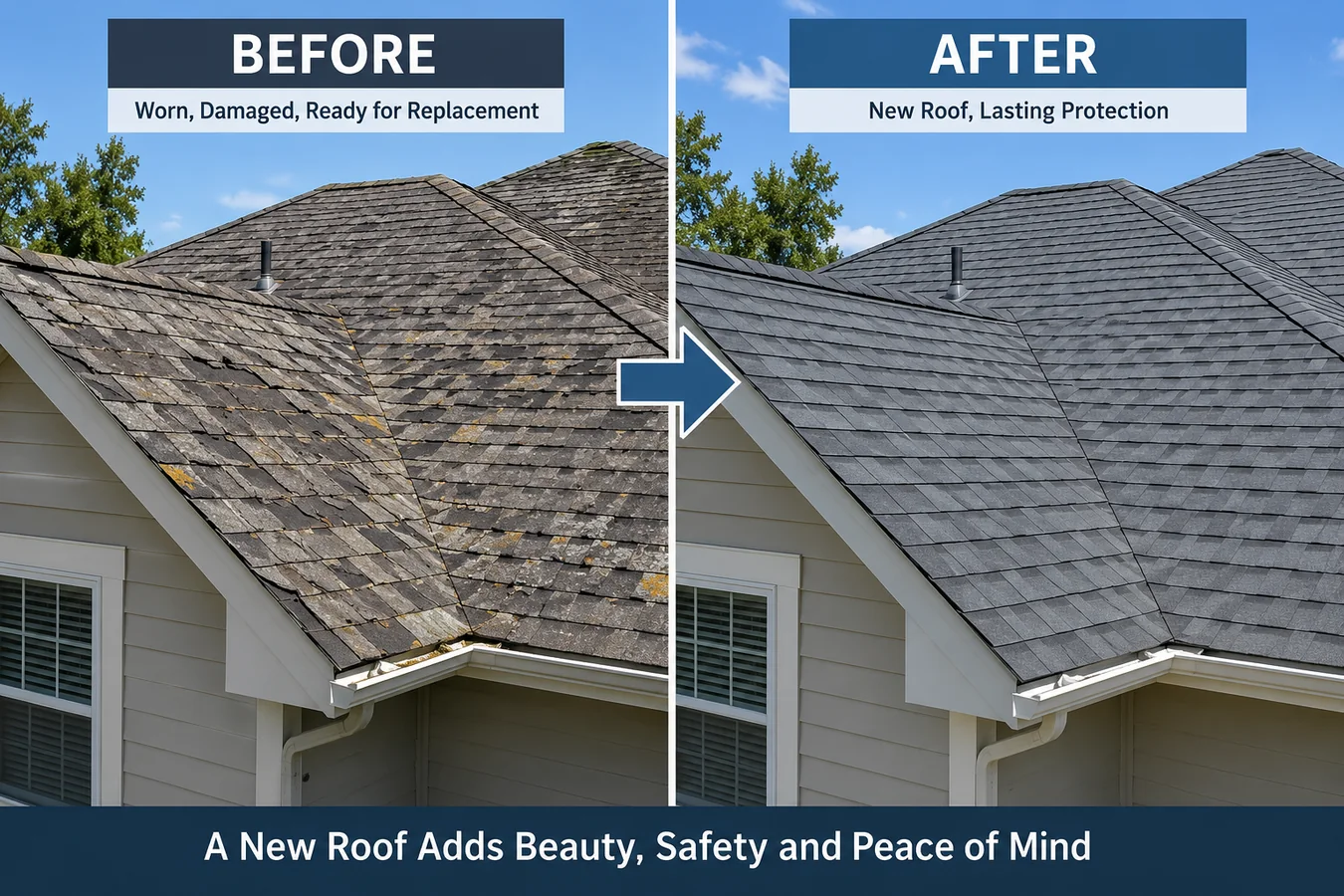
Before and after comparison of a weathered asphalt shingle roof and a newly replaced roof
Illustrative before-and-after example of an aging roof and a completed roof replacement. Actual replacement needs should be based on the condition of the individual roof.

Material & product

Asphalt shingles, metal, tile and other systems have different designs, durability characteristics and maintenance needs.

Installation

Flashing, fastening, underlayment, penetrations, edges and ventilation details can strongly influence performance.

Exposure

Heat, ultraviolet exposure, wind, hail, heavy rain, snow, debris and repeated severe weather can change the aging pattern.

Roof design

Pitch, valleys, transitions, penetrations, drainage and complex geometry can create different stress points.

Ventilation & moisture

Attic heat and moisture conditions can affect the roof assembly and should be considered during evaluation.

Damage history

Previous leaks, storm events, modifications and earlier roofing work all add important context.

Material matters

Roof lifespan varies substantially by roofing system

Industry sources illustrate why a single universal number is misleading. The Metal Roofing Alliance says metal roofing can commonly last 30–50+ years and cites shorter typical service for asphalt roofing. The Tile Roofing Industry Alliance describes clay and concrete tile as exceptionally long-lived, with many manufacturers offering warranties of 50 years or more.

Roofing typeUseful planning perspectiveWhat still needs evaluation
Asphalt shinglesService life varies significantly by product, climate, pitch and installation. Aging shingles should be judged by condition, not calendar age alone.Granule loss, cracking, curling, missing shingles, seal integrity, flashing, deck condition and leak history.
Metal roofingMetal Roofing Alliance guidance describes roughly 30–50+ years as a general service-life range for metal roofing.Coatings, fasteners or seams where applicable, flashing, penetrations, corrosion, storm damage and installation details.
Clay or concrete tileTile Roofing Industry Alliance says tile roofs can be extremely long-lived and notes manufacturer warranties commonly reach 50 years or more.Individual tiles, attachment, flashing, underlayment, penetrations, deck and the condition of components beneath the tile.
Wood / specialty systemsExpected life varies widely by material, grade, climate, installation and maintenance.Splitting, decay, moisture, fastening, flashing, fire/weather exposure and system-specific requirements.
Important: A long-lived surface material does not mean every component beneath or around it has the same service life. Flashing, underlayment, sealants, fasteners, penetrations and decking may have different conditions.
Age vs. condition

When roof age becomes more meaningful

Age becomes more useful when it aligns with physical evidence. An older roof showing widespread deterioration, recurring leaks, multiple failing details or storm damage presents a different decision than an older roof that remains stable and serviceable.

Likewise, a comparatively young roof can still develop serious problems because of severe weather, installation defects, inadequate details or other damage.

See the Full Replacement Warning-Sign Guide →

Replacement timing

Five times to consider a professional roof evaluation

1. You do not know the roof's history

If you recently purchased the home or records are incomplete, establishing the roof's approximate age, material and present condition can improve future planning.

2. Problems keep appearing

Multiple leaks or separate deteriorated areas deserve a broader look at the entire roof system rather than treating each symptom in isolation.

3. A major storm occurred

High winds, hail, debris or other severe weather can change roof condition regardless of age.

4. You are planning a major project

Solar installation, additions and other projects that interact with the roof may make its remaining condition especially relevant.

5. The roof is older and visibly changing

Age combined with widespread visible deterioration is a stronger reason for evaluation than age by itself.

Repair history

When repeated work changes the economics

A roof does not need replacement merely because it has been worked on before. But if separate failures continue developing, homeowners should ask whether additional isolated work is addressing the overall condition or simply postponing a larger project.

The right comparison is not just “repair price versus replacement price.” Consider what each scope actually solves, what remains in place, the condition of surrounding materials, compatibility with existing roofing and the likelihood of additional failures.

Planning ahead

If replacement appears likely, prepare before comparing price

A useful replacement estimate should define the project—not simply provide a total. Ask about tear-off, decking, underlayment, roofing materials, flashing, ventilation, penetrations, edges, disposal, permits or inspections where applicable, warranties and possible change orders.

Document the roof

Gather installation dates, prior invoices, warranties, storm records and previous roofing reports if available.

Ask for evidence

Photos and clear explanations can help you understand whether deterioration is localized or widespread.

Compare scope first

Two prices are not truly comparable when the proposed materials, decking terms, flashing, ventilation or exclusions differ.

Prepare for a Roof Replacement Estimate →

Old enough to replace? The roof itself should answer that question.

Use age to plan and ask better questions. Use actual condition, documented findings and a defined scope to make the replacement decision.

Roofing Help USA provides homeowner information and may help connect consumers with independent service providers. Roofing Help USA does not perform roofing work.

FAQ

Roof lifespan questions

How long does a roof last?

There is no single lifespan for every roof. Material, product, installation, weather exposure, ventilation, design, maintenance and damage history all affect service life. Actual condition matters more than age alone.

Should I replace a roof just because it is old?

Not necessarily. Age is planning information. Replacement should be supported by actual condition, such as widespread deterioration, repeated failures, deck or flashing problems, extensive damage or other evidence that makes full replacement reasonable.

How long can a metal roof last?

The Metal Roofing Alliance says homeowners can generally count on metal roofing lasting about 30 to 50 years or more. The exact system, installation, environment and condition still matter.

How long can a tile roof last?

The Tile Roofing Industry Alliance describes properly installed clay and concrete tile as exceptionally durable and says many manufacturers offer warranties of 50 years or more. The condition of underlayment, flashing, attachment and other roof components must still be evaluated.

Can a newer roof need replacement?

Yes. Severe storm damage, installation problems or other major system failures can make replacement a consideration even when the roof is not especially old.

What should I do if I do not know my roof's age?

Look for closing documents, permits, invoices, warranties and previous owner records. A roofing professional may also be able to identify material condition and other clues, but exact installation age may not always be determinable from appearance alone.